
Tattoo Aftercare Products: 3 Essentials for Fresh Ink
Getting a new tattoo is only the beginning. Once the needle stops, your skin enters a recovery phase that requires simple, consistent care.
A fresh tattoo can feel tender, warm, tight or dry during the first few days. As the skin recovers, peeling and itching may follow. The right tattoo aftercare routine can help you keep the area clean, comfortable and properly moisturised while you give your skin time to recover.
The good news? You don't need a shelf full of products.
A simple tattoo aftercare routine can be built around three essentials:
-
Gentle cleansing
-
Light moisturisation
-
Protection from friction, scratching and unnecessary irritation
In this guide, we'll explain what happens to your skin after getting tattooed, what to look for in tattoo aftercare products and how three Sinner's Rabbit products — Tattoo Vitamins Balm, Soothing Clove Soap and Healing Booster Oil — can fit into a simple, artist-guided aftercare routine.
Important: Always follow the aftercare instructions provided by your tattoo artist. If you notice spreading redness, worsening pain, significant swelling, pus, fever, chills or other concerning symptoms, seek medical advice.
Why Is Tattoo Aftercare Important?
Tattooing involves repeatedly puncturing the skin with needles to deposit pigment. This temporarily disrupts the skin barrier, so the tattooed area needs time to recover.
In the early stages, you may notice:
-
Mild redness
-
Tenderness or sensitivity
-
Slight swelling
-
A feeling of warmth
-
Clear fluid or light oozing
-
Dryness or tightness
-
Itching and peeling as recovery progresses
Aftercare isn't about covering the tattoo with as much product as possible. In most cases, gentle cleansing, clean hands, appropriate moisturisation and avoiding unnecessary irritation are more important than using multiple products or applying thick layers.
The goal is simple: keep the area appropriately clean, moisturised and protected while your skin recovers.
What Happens to Your Skin After Getting a Tattoo?
Every tattoo heals differently. Size, placement, tattooing technique, pigment saturation, individual skin characteristics and aftercare practices can all influence the recovery process.
While everyone's experience is different, fresh tattoos commonly go through several stages.
1. The First Few Days
Immediately after a tattoo session, the skin may look red or irritated and feel similar to a mild abrasion or sunburn.
Depending on the tattoo and the dressing used, you may also notice a small amount of clear fluid.
During this stage:
-
Follow your artist's instructions for removing or keeping on the dressing.
-
Wash your hands before touching the tattoo.
-
Clean the area gently when instructed.
-
Avoid unnecessary touching.
-
Avoid scratching or rubbing.
-
Don't apply excessive amounts of balm, cream or oil.
Your tattoo artist may recommend a specific dressing or aftercare schedule, so their instructions should take priority.
2. The Peeling Stage
After the initial sensitivity settles, the tattoo may begin to feel dry, tight or itchy.
Light peeling and small flakes can be a normal part of skin recovery.
This is usually the stage when people are most tempted to scratch or peel the tattoo.
Don't.
Picking at flakes or scabs can irritate the recovering skin and may affect the final appearance of the tattoo.
Instead, keep the area clean, moisturised according to your aftercare instructions and leave the peeling skin to shed naturally.
3. The Settling Stage
A tattoo can look different while the skin is recovering. Colours may temporarily appear less vibrant or slightly cloudy as the surface settles.
Even when the tattoo looks better externally, the skin may still be completing its recovery.
Continue following your artist's aftercare instructions until the skin has fully settled.
How to Choose the Best Tattoo Aftercare Products
The best tattoo aftercare products aren't necessarily the ones making the biggest promises.
Instead, look at what the product is designed to do and whether it fits your stage of recovery.
When choosing tattoo aftercare products, consider:
Look for products that:
-
Are designed for tattooed or sensitive skin
-
Have clear ingredient and usage information
-
Can be applied without aggressive rubbing
-
Help maintain comfortable skin moisture
-
Have clear application instructions
-
Come from a brand that provides transparent product information
Be cautious with:
-
Strongly fragranced products
-
Harsh exfoliants and scrubs
-
Products containing ingredients that irritate your skin
-
Excessively thick layers of ointment
-
Unverified home remedies
-
Products making guaranteed healing claims
Remember that natural doesn't automatically mean suitable for everyone. Botanical and essential-oil ingredients can still cause irritation or sensitivity in some people.
If a product causes increasing burning, swelling, rash or another unexpected reaction, stop using it and seek appropriate advice.
3 Essential Tattoo Aftercare Products from Sinner's Rabbit
A practical tattoo aftercare routine doesn't need to be complicated.
Sinner's Rabbit offers products designed around different parts of the tattoo-care routine — from cleansing to moisturisation and conditioning.
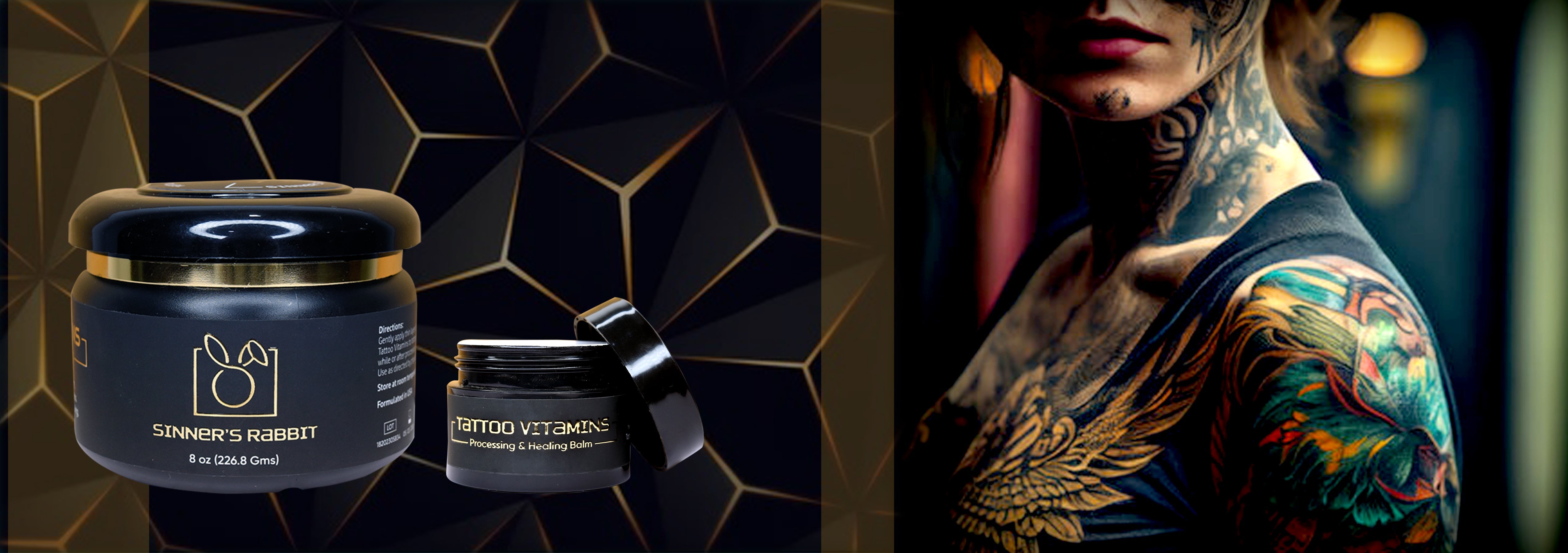
1. Sinner's Rabbit Tattoo Vitamins Balm
A fresh tattoo can become dry or tight as the skin recovers. A suitable balm can help maintain moisture and keep the skin feeling conditioned.
Sinner's Rabbit Tattoo Vitamins Balm is designed for use before, during and after tattoo sessions. As part of aftercare, it can be applied sparingly to help maintain comfortable, moisturised skin.
Key ingredients include:
-
Beeswax
-
Vitamins A, D and E
-
Witch hazel
-
Calendula
-
Vetiver
-
St. John's wort
-
Mineral oil and moisturising base ingredients
Why choose Tattoo Vitamins Balm?
-
Designed for tattoo-care routines
-
Spreads easily in a thin layer
-
Helps maintain skin moisture
-
Suitable for professional tattoo workflows and personal aftercare
-
Available in convenient sizes
How to use Tattoo Vitamins Balm
Wash and dry your hands before touching the tattoo.
Clean the tattoo according to your artist's instructions and allow the area to dry. Apply a small amount of balm and gently spread it into a thin, even layer.
You don't need to cover the tattoo with a thick coating. The skin should feel lightly conditioned rather than greasy or heavily covered.
Always follow the product label and your tattoo artist's recommended routine.
2. Sinner's Rabbit Soothing Clove Soap
Cleansing is one of the most important parts of tattoo aftercare.
A fresh tattoo can come into contact with sweat, surface residue and other contaminants, but aggressive washing can also leave recovering skin feeling irritated or excessively dry.
Sinner's Rabbit Ready-to-Use Soothing Clove Soap is formulated specifically for tattoo-related cleansing and uses a foaming format that can be distributed across the skin without vigorous scrubbing.
Its formula features ingredients including clove-derived eugenol and lavender.
Why choose Soothing Clove Soap?
-
Designed for tattoo-related cleansing
-
Foaming format helps minimise unnecessary rubbing
-
Helps cleanse surface residue
-
Available in ready-to-use and concentrated professional formats
-
Suitable for tattoo studios and artist-directed personal aftercare
How to use Soothing Clove Soap
Wash your hands before touching the tattoo.
Use the product according to the instructions on its packaging and your artist's recommendations.
If you're using the concentrated version, dilute it exactly as directed before application.
Gently distribute the foam across the tattoo without scrubbing. Rinse as instructed and pat the area dry with a clean disposable paper towel.
Don't rub the tattoo dry.
3. Sinner's Rabbit Healing Booster Oil
As the tattoo moves into the peeling and settling stages, the surrounding skin may feel dry or tight.
Sinner's Rabbit Healing Booster Oil is a lightweight tattoo-care oil designed to condition and moisturise tattooed skin without the heavy feel of a thick ointment.
Its compact 5 ml format also makes it practical for artist aftercare kits and travel.
Highlighted ingredients include:
-
Jojoba oil
-
Hemp oil
-
Vitamin E
-
Vetiver
-
Helichrysum
-
Geranium
-
Lavender
-
Witch hazel
Why choose Healing Booster Oil?
-
Lightweight oil format
-
Designed for conditioning tattooed skin
-
Helps moisturise dry-feeling skin
-
Convenient 5 ml size
-
Easy to include in aftercare kits
-
Suitable for maintaining conditioned skin once the tattoo has settled
How to use Healing Booster Oil
Make sure your hands and the tattooed area are clean.
Apply a small amount and distribute it gently across the area without aggressive rubbing.
There's no need to layer multiple moisturising products simply because they're available. Choose the product that fits your current aftercare routine and follow its instructions.
How to Build a Simple Tattoo Aftercare Routine
Your tattoo artist's instructions should always come first. Dressing type, tattoo size, placement and individual skin response can all affect the recommended routine.
A simple approach can look like this:
Step 1: Wash Your Hands
Before touching your tattoo or applying any product, clean your hands thoroughly.
Clean hands are one of the simplest ways to reduce unnecessary contamination.
Step 2: Clean Gently
Use the cleanser recommended by your artist.
Avoid:
-
Aggressive scrubbing
-
Loofahs
-
Rough cloths
-
Scrubbing brushes
-
Very hot water
The goal is to clean the tattoo without unnecessarily irritating the skin.
Step 3: Pat Dry
Use a clean disposable paper towel and gently pat the area dry.
Avoid rubbing.
Allow the tattoo to finish drying before applying your aftercare product.
Step 4: Moisturise Lightly
Apply a small amount of the balm or oil recommended for your routine.
A thin layer is generally preferable to a thick coating.
More product doesn't automatically mean better aftercare.
Step 5: Leave It Alone
Once your aftercare is done, resist the temptation to constantly touch, inspect or moisturise the tattoo.
Wear clean, comfortable clothing and minimise repeated friction against the area.
Common Tattoo Aftercare Mistakes to Avoid
Washing Too Often
Keeping a tattoo clean is important, but excessive washing can contribute to dryness and irritation.
Follow the cleaning schedule recommended by your tattoo artist rather than repeatedly washing the area throughout the day.
Applying Too Much Product
A thick layer of balm or oil isn't necessarily better.
Excess product can leave the tattoo feeling greasy, sticky or overly occluded.
Apply enough to lightly condition the skin.
Picking or Scratching
Peeling and itching can be frustrating, but scratching or picking can irritate recovering skin.
Let flakes and scabs come away naturally.
Soaking a Fresh Tattoo
Avoid swimming, hot tubs, baths and other prolonged soaking while the tattoo is recovering, unless your artist or healthcare professional advises otherwise.
A quick shower and prolonged soaking are very different things.
Wearing Tight or Dirty Clothing
Constant friction can make an already-sensitive area more uncomfortable.
Whenever possible, choose clean, loose-fitting clothing that doesn't repeatedly rub against the tattoo.
Exposing a Fresh Tattoo to Direct Sunlight
A fresh tattoo should be protected from unnecessary sun exposure while the skin is recovering.
Once the tattoo is fully healed, sun protection becomes an important part of maintaining the appearance of tattooed skin. Dermatologists commonly recommend a broad-spectrum, water-resistant sunscreen with SPF 30 or higher for exposed skin.
Ignoring Warning Signs
Some redness, tenderness, itching and peeling can occur during normal tattoo recovery.
However, symptoms that are getting progressively worse deserve attention.
Seek medical advice if you experience symptoms such as:
-
Spreading or worsening redness
-
Increasing pain
-
Significant swelling
-
Pus or unusual discharge
-
Fever or chills
-
A severe or worsening rash
-
Other symptoms that concern you
When in doubt, speak with a qualified healthcare professional.
How Long Should You Use Tattoo Aftercare Products?
There isn't one universal aftercare timeline for every tattoo.
A small fine-line tattoo may behave differently from a large, heavily saturated piece. Placement, technique, individual skin characteristics and aftercare can also influence recovery.
Continue your artist-recommended routine while the skin is recovering.
As peeling and dryness settle, you can gradually transition from dedicated fresh-tattoo care to your normal skincare routine.
And remember: a tattoo looking temporarily dull doesn't necessarily mean something is wrong. Skin can appear cloudy or less vibrant while the surface is recovering.
Don't compensate by applying more and more product.
Give the skin time.
Frequently Asked Questions About Tattoo Aftercare
What are the essential tattoo aftercare products?
A basic tattoo aftercare routine generally focuses on gentle cleansing and appropriate moisturisation, along with protecting the tattoo from unnecessary irritation.
The specific products and frequency should follow your tattoo artist's instructions and your skin's response.
What soap should I use on a fresh tattoo?
Use a cleanser recommended by your tattoo artist that is appropriate for the tattooed or sensitive skin.
Avoid aggressive scrubbing and harsh products that leave your skin feeling excessively dry or irritated.
Can I use both tattoo balm and healing oil?
You usually don't need to layer multiple moisturising products.
Choose the product that fits your current stage of aftercare and follow its directions. Using more products doesn't automatically improve the recovery process.
How much tattoo balm should I apply?
Use a small amount and spread it into a thin, even layer.
The tattoo shouldn't be buried under a thick, greasy coating.
Is peeling normal after getting a tattoo?
Light peeling, itching and small flakes can occur as the skin recovers.
Avoid picking or scratching.
If the area becomes increasingly painful, swollen, significantly red or produces pus, seek medical advice.
When can I stop using tattoo aftercare products?
The timeline varies between tattoos.
Follow your artist's instructions and continue appropriate care while the skin is recovering. Once the tattoo has settled, you can transition to regular skincare and consistent sun protection.
How can I keep my tattoo looking vibrant?
Once your tattoo has completely healed, focus on keeping your skin moisturised and protecting exposed tattooed skin from ultraviolet radiation.
A broad-spectrum sunscreen with SPF 30 or higher can help protect exposed skin from UV damage.
Your Tattoo Is the Art. Aftercare Is Part of the Process.
A great tattoo deserves more than a great session.
It deserves thoughtful care afterwards.
You don't need a complicated routine or a dozen different products. Focus on the fundamentals: clean gently, moisturise appropriately, avoid unnecessary irritation and give your skin time to recover.
Sinner's Rabbit brings together tattoo-care essentials designed around the needs of artists, studios and tattoo enthusiasts — from cleansing with Soothing Clove Soap to conditioning with Tattoo Vitamins Balm and Healing Booster Oil.
Clean gently. Moisturise lightly. Let your skin recover at its own pace.
Explore the Sinner's Rabbit tattoo aftercare range and build a routine that works with your artist's instructions.
Important Disclaimer
This article provides general educational information about tattoo aftercare and is not a substitute for professional medical advice. Tattoo recovery varies between individuals. Always follow the specific instructions provided by your tattoo artist and consult a qualified healthcare professional if you develop concerning or worsening symptoms.